Category Archives: Writing
Owls, Larks and the Writing Process
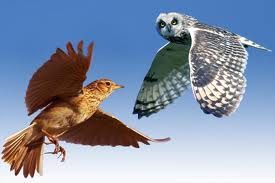 What do owls and larks have to do with writing? Well, when you are two authors writing under one pen name and one of you is an owl and the other a lark, finding the perfect time for writing sessions can be challenging.
For those who are wondering what we mean by owls and larks, we are referring to people who like to stay up late (owls) and those who like to get up early (larks). It’s annoying enough if you happen to be an owl married to a lark (or vice-versa) but things really get frustrating when owls and larks try to work together.
From an owl’s point of view, larks are those annoying creatures who rise and shine with smiles on their faces and a song on their lips. Very painful for any nearby owls who can’t help wondering what the irritating lark can possibly be so cheerful about at such an ungodly hour of the day. Larks think nothing of awakening an owl just as the sun is rising, eager to relate the fantastic plot idea they had during the night. Larks have the mysterious ability to wake up with their brains fully functioning. No warm-up time seems to be required. Owls just can’t relate.
A writing lark will often fly out of bed and head straight for the computer. The bubbly, oh, so sickeningly alert lark will then proceed to check all social networking sites, email accounts, etc., and call out interesting tidbits to the owl sleeping in the next room. The enthusiasm can be overwhelming to the poor owl, who dives deeper under the blankets in a classic owl-camouflage maneuver. The oblivious lark continues to chirp, unaware that her chatter is not even being processed by the sleepy owl brain.
From a lark’s point of view, owls are those annoying creatures who stay wake half the night prowling through the house and wanting to engage in animated book discussions just as the poor lark is trying to fall asleep. How anyone can be so full of energy after being awake for so many hours is a mystery to the lark who operates on theory that people should be full of energy after a good night’s sleep not just as they are going to bed. The owl flies in the face of such drivel, hitting his stride as the midnight hour approaches. Larks often wonder what they have done to deserve such a spouse.
Owls will often grab a yellow legal pad, turning on the bedroom light and jotting down several pages of notes on an upcoming chapter, repeatedly expressing their ideas to the lark, who, by now, has wrapped a pillow around her head in a standard lark-avoidance move. The owl, oblivious to such tactics, continues to hoot, his enthusiasm wasted on the nearly but, unfortunately, not quite asleep lark.
So what are owls and larks who work together supposed to do? We don’t know about other owls and larks, but twilight is our answer. The owl is truly awake and the lark has not yet begun to get drowsy. Thorny issues of character development and sticky plot problems can only be resolved during this magical time when both the owl’s brain and the lark’s brain are still firing on all cylinders.
The owl/lark problem is an old one, addressed by many writers and artists over the years. We’ll end with our favorite commentary on the issue by the legendary Charles Shultz in his wonderful cartoon “Peanuts”:
Lucy: Physicians can learn a lot about a patient by asking what may even sound like a very simple question. Which do you prefer, a sunrise or a sunset?
Charlie Brown: Well, a sunset, I guess!
Lucy: I thought so! You’re just the type ! I might have known that! What a disappointment! People who prefer sunsets are dreamers! They always give up! They always look back instead of forward! I just might have known you weren’t a sunrise person! Sunrisers are go-getters! They have ambition and drive! Give me a person who likes a sunrise every time! Yes, sir! I’m sorry Charlie Brown. If you prefer sunsets to sunrises, I can’t take your case. You’re hopeless! (She leaves.)
Charlie Brown: Actually, I’ve always sort of preferred noon!
Computers Who Think Too Much
 We have a new computer. And it’s great. Except for one thing. It keeps trying to think for us.
Now this might be okay if the computer was good at thinking. But it’s not. It’s good at following commands. It’s exceptional at graphic displays. And it sure is the fastest thing on silicon chips. But thinking is something it can’t quite do. That doesn’t stop it from trying.
Open a window and drag the box over to the edge of the screen to get it out of the way? The computer decides that we want the window to fill the screen and eagerly resizes it for us, deaf to our annoyed remarks. Begin to type a web address, email address, or search term? The computer leaps to our assistance and begins a guessing game about what we are trying to do. And computers are bad at guessing games. They take everything much too literally.
And don’t even get us started about how the computer liked to decide which programs should be updated and how often. Every time we started the computer it would oh-so-helpfully rush out into the Internet and begin scanning for any and all updates to EVERY program we had. That was its default setting, for heaven’s sake! Most programs are invasive enough. We didn’t need the machine itself encouraging them! (THAT setting was changed pronto!)
The most annoying form of computer-think occurs when we are writing. Writing fiction involves creative expression, and creative expression does not follow strict grammar rules. Dialogue uses sentence fragments and slang. Ever try to explain slang to a computer? Oh, you can tell it to add the word it is objecting to to the dictionary but it never learns how to correctly use the word. And scifi-fantasy terms? Forget it! The computer will happily add the invented vocabulary necessary to describe make-believe realms but it stubbornly refuses to acknowledge the new words as nouns, verbs, or any other part of speech. But that doesn’t stop it from trying to decide how you should use the word:
Us: Jinn is the name of a character in our book.
Computer: Jinn are supernatural creatures from Arabic folklore.
Us: Yes, but we are using the term as a proper noun. A name.
Computer: The word jinn is a common noun. Jinn are supernatural creatures from Arabic folklore.
Us. Yes, but in this case Jinn is a woman’s name. Please stop trying to correct the verb usage from singular to pluaral.
Computer. Jinn are supernatural creatures from Arabic folklore. Plural. (We’re pretty sure we heard it give us that raspberry at this point.)
Yes, yes we have turned off the grammar-check function. It was wrong as often as it was correct anyway, which leads us to our final point. Computers are great tools, but we find it annoying that they are trying to second-guess what we want, make decisions for us, and generally give us assistance that is incorrect often enough to make us mistrust any input from the machine. And it is more than a little scary when we observe how many people are letting their computers do their thinking for them.
How Writers Exercise
 You would think that sitting at a computer all day would mean that writers get darn little exercise. Not so! Using just a few objects found in any house, writers can stay fit. Here’s how:
1. Cat. Preferably, more than one cat. Sit at the computer. Begin to type. At the sound of a loud crash in another room, jump up and race to the scene. Clean up broken vase/lamp/knickknack. Return to computer. Begin to type. When loud hissing and snarling breaks out, run to the next room. Observe cats sitting calmly washing themselves and looking at you as if wondering why you are breathing so hard.
2. Washer and Dryer. Throw a load of clothes in the washer. Run back upstairs. Sit at computer. Begin to type. Remember fabric softener. Run back downstairs. Add fabric softener. Run back upstairs. Sit at computer. Actually type a few pages. Washer buzzer sounds. Run back downstairs. Transfer load to dryer. Start second load. Run back upstairs. Begin to type. Remember dryer sheet. Run back down stairs. See washer spilling water all over the floor. Grab mop and begin aerobic mopping.
3. Stove. Place main course in oven. Sit at computer. Begin to type. Jump up and run to kitchen to start the potatoes. Return to computer. Begin to type. Jump up and run back to kitchen to turn down potatoes which are boiling over. Return to computer. Begin to type. Buzzer sounds. Jump up, run to kitchen and turn meat over. Return to computer. Begin to type. Encounter really exciting scene which is flowing so beautifully you are transported. Come to when smoke alarm sounds. Race madly to kitchen to put out the fire.
4. Spouse. Get married. Sit at computer. Begin to type. Spouse calls from basement. Jump up and run downstairs. Answer perfectly simple question about what to do with old box of junk. Run back upstairs. Begin to type. Spouse calls from garage. Run out to garage. Help lift several heavy boxes of junk to make room for new box of junk. Return to computer. Begin to type. Spouse calls from front yard. Get up and run outside. Cat escaped while spouse was carrying box of junk to the garage. Spend next twenty minutes jogging around the yard chasing the cat.
5. Kids. Self-explanatory.
6. Telephone. Sit at computer. Begin to type. Phone rings. Jump up, since it is the land line in the other room, and run to see who it is. A telemarketer. Return to computer. Begin to type. Cell phone rings. Jump up (because the phone is in the bedroom on the nightstand) and run. Friend texting silly joke. Return to computer. Begin to type. BOTH phones ring. Answer cell phone (which you have cleverly brought with you) while running for the other line. Friend wants to know if you received the funny text. Telemarketer wants to sell you a gym membership. Laugh so hard it counts as aerobic breathing.
Writing in Layers
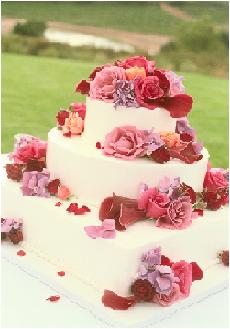 The first draft of Time’s Illusion is nearing completion. And the next step? You’d think it was editing, right? Nope. It’s layering.
When we write, we look at the first draft as the basic structure of the book. It establishes where the action is, who is present, how the characters move through the story. A bare-bones, action-and-dialogue scenario. A lot of experimenting goes on in our first drafts, a testing of story boundaries and character limits.
Upon this base we add layers. This process fleshes out the details that really bring the tale to life. Descriptions are expanded. Dialogue is enhanced. This is the five-senses phase, when we get to play with color, sound, and sensation. Like a stage production, we decide what our characters will be wearing, we paint the scenery, adjust the lighting. The worlds we have created come alive.
For those who aren’t into play production, think of it as baking a cake. The cake itself is the basic story. The icing holds the story layers together. The fancy flourishes give the tale depth and beauty. When it is complete it is a feast for the eyes. It smells delicious. Your mouth waters in anticipation. The first bite makes you want to take a second bite.
Just like a good book.
The Thankful Blog
 When Mary was nine years old, she wrote her first blog. Yes, we know that the Internet did not exist then. In the olden days, nine year olds blogged by writing their thoughts on paper and handing them in to their teachers. If the teacher deemed the post worthy, she read it aloud to the class. We’d like to share Mary’s Thanksgiving blog:
We Are Thankful
We are thankful for food, homes, clothing, sisters, brothers, fathers, and mothers. But most of all we are thankful for love. We celebrate Thanksgiving by giving thanks to God for all the nice things He gave us. He gave us the Earth. He gave us water and the sun. We thank God for his love.
Happy Thanksgiving to everyone!
We’re Blogging When We Should Be Writing
 We saw an interesting post on Twitter last week. An author wrote that he was spending more time promoting his books than writing them.
We know the feeling.
Facebook. Twitter. Blogs. Etc., etc., etc. Get the word out. Plug that book. Get another follower. Create some book trailers. Speak at a library, school, town fair, supermarket, doctor’s waiting room. (Yes, we did.) In short, SPREAD THE WORD.
Why do we spend all this time on promotion? We were asked that question by a student in a school where we recently spoke. Sigh. There are several reasons.
1. The book promotion elves are not taking any new clients.
2. The reading public, amazingly, had never heard of us before our first book came out.
3. Do you know how many books are published each year? (Um, we didn’t either. A quick check produced a figure of over 955,900 according to worldometers. The scary thing was the counter that was recording the number of published books changed every few minutes. Goodness knows what it will be when you are reading this.)
4. The cost of hiring someone to do it for us made us hyperventilate.
Seriously, book promotion is a necessary evil. Evil? Well, perhaps, time-suck would be a better term. Yes, yes, we have read the blogs from authors who tell us we should glory in promotion, look it in the eye, wrestle it into submission. We’ve also seen the posts about making book promotion our friend, lavishing it, loving it for all the good it does for us.
We admire the authors who are gung-ho about promoting their books. We marvel at them, wondering how they do it all, where they get the time. We are secretly convinced some of them have a time machine, or perhaps a Time-Turner just like Hermione in the Harry Potter series. Write a few chapters, turn back time, do some book promotion. Write a few more chapters, turn back time, do some more book promotion.
However, the small, rebellious writer in each of us resents the time spent promoting books. Time spent on promotion is time spent not writing. And writing is what we love to do. Does this mean we are going to stop blogging, tweeting, posting on facebook? No. We’re committed to our writing careers and therefore committed to promoting our books.
But if anyone has a spare Time-Turner they aren’t using, please let us know.
10 Reasons We Love Book Trailers
 1. They are fun. Fun to watch, fun to create. (The Highlander Trilogy by Maya Banks)
2. They give novels a visual dimension. It’s a quick peek into the world created by the story. (Give Up the Ghost by Megan Crewe)
3. They give readers another tool to help them decide if they would like to read the book. (Time’s Edge by J.M. Dattilo. Yes. Shameless self-promotion.)
4. They can tell a story in (usually) two minutes or less. (The Hot List by Hilary Homzie. 45 seconds.)
5. They whet the appetite. (Miss Peregrine’s Home for Peculiar Children by Ransom Riggs)
6. You don’t have to be a professional book trailer designer to create a good trailer. (Demon Hunter by Cynthia Vespia)
7. They make you laugh. ( Super Sad True Love Story by Gary Shteyngart).
8. They can be artistic. (Tell Me a Secret by Holly Cupala)
9. Some are really beautiful. (Beautiful Places by Chad Prosser)
10. They don’t always take themselves too seriously. (Magic Slays by Ilona Andrews)
Why First Drafts Are Fun
 We can already hear the screaming. Writers everywhere, who are pulling their hair out trying to finish the first drafts of their books, will take one look at the title of this blog, shake their bald heads and shriek out, “Are they crazy? Writing a first draft is like being in labor for a year without the benefit of painkillers!”
It can seem that way sometimes, especially when you can’t think of anything to write and even banging your head on the table doesn’t help. However, we try to look at our first drafts with a no-holds-barred approach. In short, anything goes.
First drafts are about creation. Nothing will get in the way more than worrying about punctuation, spelling, and grammar. And nothing stifles creativity faster than limits. Limits on how you think your plot is going to unfold. Limits on what you think your characters are going to do. Even limits on who you think might one day read the story.
Now, don’t misunderstand. All the above-mentioned things are important. Eventually. But not during the creative process. We find the words flow mostly freely when we don’t worry about a rigid outline or the fact that a scene seems to be going in a direction we hadn’t anticipated. We just go with it. If a fantastic idea pops into our heads, we write about it. Nine time out of ten, the unexpected scene will fit in somewhere in the story. After all, we know our characters, who they are, how they think. If what we are writing about isn’t in the original scope of the plot, so what? This is how ideas are born.
When we begin a story, we know where we want our characters to end up. During a first draft, we explore how they might get there. And, yes, that exploration is fun because it takes us in new directions, along paths we hadn’t planned on. Kind of like life.
First drafts are a dream landscape where anything is possible. It’s exciting to stretch our imaginations and write without boundaries for the pure fun of writing. Every writer knows the high of being so into a scene that you can’t type fast enough. There is nothing like it.
When our inner critics rear their negative heads, we banish them. Why spoil the fun? No criticism, no nay-saying allowed during first drafts. Those things are for editing, a truly painful process. But that’s another blog.
5 Good Blogs About Writing
 Over the past few years we’ve read some great blogs that offer excellent advice for writers. Here are some that are worth checking out:
1. Creativity? Train Your Brain to Be an Idea-Generating Machine. by Cheryl Craigie
2. Why You Shouldn’t Follow Trends by Nathan Bransford
3. George Orwell’s 5 Rules for Effective Writing by Erin Falconer
4. Writing Exercise: Switching Points of View by Jodi Cleghorn
5. Want Some Advice? Ignore Any Advice by Russell Smith
Our Favorite Time’s Edge Quotes

Shelfari, amazon.com’s “community-powered encyclopedia for book lovers”, has a neat feature; readers and authors can add quotes from books they enjoyed. We had a lot of fun selecting quotes from our novel Time’s Edge. Here are our favorites (in no particular order):
“It’s impossible to walk through solid rock… You have to walk between the molecules that make up the rock.” Nick, the Sarzonian guardian
“Seers. They make everything they say sound like a prophecy.” Jafrey Ral
“What I can do is science, not magic. Magic is just a term for an aspect of science that hasn’t been explained yet.” Michael Blayne
“Within this dimension there are doorways to every place in the galaxy… A misstep in this hall can have serious consequences.” Alrick Zartollis
“If we live through this remind me to buy you a Ratherian beer.” Commander Lucas Joyston
“This place is a cross between a medieval castle and a space station.” Kate Weston
“The robot was my ancestor…just as the amoeba was yours.” Edgar, Michael’s robotic servant
“I’m ready to believe anything from a man who spends three months on a simple probe retrieval and then returns wearing a cat.” Zilla, the commander of Division 9
“You are not the portent. You are the great event.” Rista Jahlan
“Alrick will kill you if you talk, and Michael will kill you if you don’t. Glad I’m not you.” Jafrey
 J.M. Dattilo