Author Archives: jmdattilo
The Cover of Time’s Illusion
Time’s lllusion, the third book in the Time’s Edge sci-fi/fantasy series, will be published in Fall 2012. The cover has just been completed. The picture is the work of the very talented Ali Ries. You can view Ali’s artwork on her website: casperium.deviantart.com


Everything I Need to Know…

We recently read an article that took the “everything I need to know” gimmick and applied it to several books, movies, etc. What a great idea, we thought, and promptly stole it. So without further ado, here is the first installment (of course we are anticipating sequels!) of Everything I Need to Know I Learned from Time’s Edge.
Choose your battles.
“Unless you know of a way to force a scientician to leave a room when he chooses not to, you’re wasting your time.” (Orela, a member of the Executive Council, cautioning another council member not to tangle with a man who could, literally, blast him into atoms. Time’s Secret.)
Know yourself.
“Choose your path. Choose the one that calls for you alone.” (The direction given to Michael and Kate as they are being tested in the Realm of the Scienticians. Time’s Edge.)
Perception is everything.
Unfortunately, Michael did not trust his own interpretation of events. His attraction for Kate was so strong he was afraid it was coloring his perception of her. He wanted her to be innocent of any evil intentions. He wanted her to be just what she said she was. He wanted it so badly he wondered if he was twisting the facts to convince himself she was innocent. (Michael, trying to decide if he can trust Kate. Time’s Edge.)
Don’t jump to conclusions.
“I won’t pass judgment until I have all the facts.” (Michael, refusing to express a negative opinion of his commanding officer in spite of the fact that it appears that the officer deceived him. Time’s Edge.)
Be observant.
Michael saw the flicker in Radford’s eyes and recognized it for what it was. Radford was, for the first time, afraid of losing. Michael now knew he had an edge over his opponent. (Michael and Radford’s Tavon contest. Time’s Secret.)
Keep a sense of humor during stressful situations.
“Let me be, Kate,” Radford whispered. “If you die healing me, Michael will kill me anyway.” He grinned ruefully. “I think bleeding to death would be an easier way to die.” (Time’s Secret.)
Don’t be afraid to say, “I love you”.
“No, I don’t think I do,” Michael replied, remembering Kate had known he loved her even though he had never said so. He looked down at her and opened his mouth to say the words.
“I love you, too, Michael.” Kate smiled and then stretched up on her toes to kiss him. (Time’s Edge.)
Libraries Rock
Take two minutes (all right, two minutes and 53 seconds) and watch this incredible video of how the Troy Library saved itself from disappearing forever. Go, Troy!
Why Book Promotion Sucks
 1. It’s tedious. Not at first. At first it’s new and exciting. Kind of like falling in love. But as time passes, monotony sets in. How many ways can you say “buy my book”? How many times do you have to say it? The answer? Forever! It’s an endless Groundhog Day of tweets, blurbs, and blogs. (Groundhog Day. The movie with Bill Murray where he lives the same day over and over. Just rent it and watch it. You’ll see what we mean.)
2. Everyone else is doing it. Yep. Me, you, our plumber, your mother-in-law, and everyone else on the block. The result? A cacophony of white noise in which nearly everyone’s attempts to be heard are lost. Like The Cricket in Times Square. (A book by George Selden. Go to the library. Borrow it and read it. You will see what we mean.)
3. It’s time consuming. Hours and hours every day. Must post. Must blog. Must check stats. It eats loads of time. Time that could be spent writing. Most authors are aware that the more books you write, the more income you bring in. And writing is what authors love to do. But who has time to do it? (Yes, we can already hear the writers who will say, I network, raise children, sew my own clothes, bake my own bread, and write ten novels a year. We admire you. We also promise to send flowers when you drop dead from over-work.)
4. It’s painful. In several ways. Physically. (Repetitive strain injuries from being on the computer too much. Also headaches from banging one’s head on the desk. ) Mentally. (I can’t possibly think of one more blog/post/tweet. Plus my head hurts from banging it on the desk.) Emotionally. (Riding the roller coaster of feelings as we watch our stats rise to new heights only to tumble back, dashing all our hopes. And the drama of restraining each other from banging our heads on the desk.)
5. We suspect it is not quite as necessary as everyone believes it is. Do our tweets, blogs and posts really make a difference? Probably not. We don’t have enough followers on any site to claim that we have reached a broad range of people. And yet our books are selling; sales are steady. (Phew. We can stop banging our heads on the desk.)
The bottom line? Ratings, reviews, and pricing seem to matter the most in promoting a book. What do authors do when they want their books to be noticed? They cut the price and have a sale. Some give a book away for free, knowing this will draw attention to their work. The hope is that if readers like the free book, they will be willing to pay for other novels by the same author.
We are going to try an experiment. (Actually it is already underway.) We are cutting back on all the social networking. Not abandoning it, just reducing the amount of time spent on promotion so we can spend more time writing. for when it comes right down to it, a good quality story is the best promotional tool of all.
Owls, Larks and the Writing Process
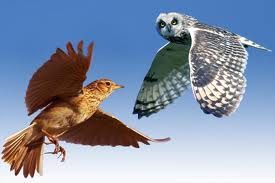 What do owls and larks have to do with writing? Well, when you are two authors writing under one pen name and one of you is an owl and the other a lark, finding the perfect time for writing sessions can be challenging.
For those who are wondering what we mean by owls and larks, we are referring to people who like to stay up late (owls) and those who like to get up early (larks). It’s annoying enough if you happen to be an owl married to a lark (or vice-versa) but things really get frustrating when owls and larks try to work together.
From an owl’s point of view, larks are those annoying creatures who rise and shine with smiles on their faces and a song on their lips. Very painful for any nearby owls who can’t help wondering what the irritating lark can possibly be so cheerful about at such an ungodly hour of the day. Larks think nothing of awakening an owl just as the sun is rising, eager to relate the fantastic plot idea they had during the night. Larks have the mysterious ability to wake up with their brains fully functioning. No warm-up time seems to be required. Owls just can’t relate.
A writing lark will often fly out of bed and head straight for the computer. The bubbly, oh, so sickeningly alert lark will then proceed to check all social networking sites, email accounts, etc., and call out interesting tidbits to the owl sleeping in the next room. The enthusiasm can be overwhelming to the poor owl, who dives deeper under the blankets in a classic owl-camouflage maneuver. The oblivious lark continues to chirp, unaware that her chatter is not even being processed by the sleepy owl brain.
From a lark’s point of view, owls are those annoying creatures who stay wake half the night prowling through the house and wanting to engage in animated book discussions just as the poor lark is trying to fall asleep. How anyone can be so full of energy after being awake for so many hours is a mystery to the lark who operates on theory that people should be full of energy after a good night’s sleep not just as they are going to bed. The owl flies in the face of such drivel, hitting his stride as the midnight hour approaches. Larks often wonder what they have done to deserve such a spouse.
Owls will often grab a yellow legal pad, turning on the bedroom light and jotting down several pages of notes on an upcoming chapter, repeatedly expressing their ideas to the lark, who, by now, has wrapped a pillow around her head in a standard lark-avoidance move. The owl, oblivious to such tactics, continues to hoot, his enthusiasm wasted on the nearly but, unfortunately, not quite asleep lark.
So what are owls and larks who work together supposed to do? We don’t know about other owls and larks, but twilight is our answer. The owl is truly awake and the lark has not yet begun to get drowsy. Thorny issues of character development and sticky plot problems can only be resolved during this magical time when both the owl’s brain and the lark’s brain are still firing on all cylinders.
The owl/lark problem is an old one, addressed by many writers and artists over the years. We’ll end with our favorite commentary on the issue by the legendary Charles Shultz in his wonderful cartoon “Peanuts”:
Lucy: Physicians can learn a lot about a patient by asking what may even sound like a very simple question. Which do you prefer, a sunrise or a sunset?
Charlie Brown: Well, a sunset, I guess!
Lucy: I thought so! You’re just the type ! I might have known that! What a disappointment! People who prefer sunsets are dreamers! They always give up! They always look back instead of forward! I just might have known you weren’t a sunrise person! Sunrisers are go-getters! They have ambition and drive! Give me a person who likes a sunrise every time! Yes, sir! I’m sorry Charlie Brown. If you prefer sunsets to sunrises, I can’t take your case. You’re hopeless! (She leaves.)
Charlie Brown: Actually, I’ve always sort of preferred noon!
A Must-Share Post
 Top Ten Ways to Annoy Gifted Children. We couldn’t agree more. Check out this right-on-the-money blog from giftedguru.com
Computers Who Think Too Much
 We have a new computer. And it’s great. Except for one thing. It keeps trying to think for us.
Now this might be okay if the computer was good at thinking. But it’s not. It’s good at following commands. It’s exceptional at graphic displays. And it sure is the fastest thing on silicon chips. But thinking is something it can’t quite do. That doesn’t stop it from trying.
Open a window and drag the box over to the edge of the screen to get it out of the way? The computer decides that we want the window to fill the screen and eagerly resizes it for us, deaf to our annoyed remarks. Begin to type a web address, email address, or search term? The computer leaps to our assistance and begins a guessing game about what we are trying to do. And computers are bad at guessing games. They take everything much too literally.
And don’t even get us started about how the computer liked to decide which programs should be updated and how often. Every time we started the computer it would oh-so-helpfully rush out into the Internet and begin scanning for any and all updates to EVERY program we had. That was its default setting, for heaven’s sake! Most programs are invasive enough. We didn’t need the machine itself encouraging them! (THAT setting was changed pronto!)
The most annoying form of computer-think occurs when we are writing. Writing fiction involves creative expression, and creative expression does not follow strict grammar rules. Dialogue uses sentence fragments and slang. Ever try to explain slang to a computer? Oh, you can tell it to add the word it is objecting to to the dictionary but it never learns how to correctly use the word. And scifi-fantasy terms? Forget it! The computer will happily add the invented vocabulary necessary to describe make-believe realms but it stubbornly refuses to acknowledge the new words as nouns, verbs, or any other part of speech. But that doesn’t stop it from trying to decide how you should use the word:
Us: Jinn is the name of a character in our book.
Computer: Jinn are supernatural creatures from Arabic folklore.
Us: Yes, but we are using the term as a proper noun. A name.
Computer: The word jinn is a common noun. Jinn are supernatural creatures from Arabic folklore.
Us. Yes, but in this case Jinn is a woman’s name. Please stop trying to correct the verb usage from singular to pluaral.
Computer. Jinn are supernatural creatures from Arabic folklore. Plural. (We’re pretty sure we heard it give us that raspberry at this point.)
Yes, yes we have turned off the grammar-check function. It was wrong as often as it was correct anyway, which leads us to our final point. Computers are great tools, but we find it annoying that they are trying to second-guess what we want, make decisions for us, and generally give us assistance that is incorrect often enough to make us mistrust any input from the machine. And it is more than a little scary when we observe how many people are letting their computers do their thinking for them.
How Writers Exercise
 You would think that sitting at a computer all day would mean that writers get darn little exercise. Not so! Using just a few objects found in any house, writers can stay fit. Here’s how:
1. Cat. Preferably, more than one cat. Sit at the computer. Begin to type. At the sound of a loud crash in another room, jump up and race to the scene. Clean up broken vase/lamp/knickknack. Return to computer. Begin to type. When loud hissing and snarling breaks out, run to the next room. Observe cats sitting calmly washing themselves and looking at you as if wondering why you are breathing so hard.
2. Washer and Dryer. Throw a load of clothes in the washer. Run back upstairs. Sit at computer. Begin to type. Remember fabric softener. Run back downstairs. Add fabric softener. Run back upstairs. Sit at computer. Actually type a few pages. Washer buzzer sounds. Run back downstairs. Transfer load to dryer. Start second load. Run back upstairs. Begin to type. Remember dryer sheet. Run back down stairs. See washer spilling water all over the floor. Grab mop and begin aerobic mopping.
3. Stove. Place main course in oven. Sit at computer. Begin to type. Jump up and run to kitchen to start the potatoes. Return to computer. Begin to type. Jump up and run back to kitchen to turn down potatoes which are boiling over. Return to computer. Begin to type. Buzzer sounds. Jump up, run to kitchen and turn meat over. Return to computer. Begin to type. Encounter really exciting scene which is flowing so beautifully you are transported. Come to when smoke alarm sounds. Race madly to kitchen to put out the fire.
4. Spouse. Get married. Sit at computer. Begin to type. Spouse calls from basement. Jump up and run downstairs. Answer perfectly simple question about what to do with old box of junk. Run back upstairs. Begin to type. Spouse calls from garage. Run out to garage. Help lift several heavy boxes of junk to make room for new box of junk. Return to computer. Begin to type. Spouse calls from front yard. Get up and run outside. Cat escaped while spouse was carrying box of junk to the garage. Spend next twenty minutes jogging around the yard chasing the cat.
5. Kids. Self-explanatory.
6. Telephone. Sit at computer. Begin to type. Phone rings. Jump up, since it is the land line in the other room, and run to see who it is. A telemarketer. Return to computer. Begin to type. Cell phone rings. Jump up (because the phone is in the bedroom on the nightstand) and run. Friend texting silly joke. Return to computer. Begin to type. BOTH phones ring. Answer cell phone (which you have cleverly brought with you) while running for the other line. Friend wants to know if you received the funny text. Telemarketer wants to sell you a gym membership. Laugh so hard it counts as aerobic breathing.
 J.M. Dattilo