Author Archives: jmdattilo
Teenage Hearing
 We were worried about our daughter’s hearing. She’s sixteen and never seems to hear anything we say. Comments made to this kid are usually answered with “Hmmm?” Requests for her to do something invariably are met with “What?” And never try calling to her from another room. You will grow old waiting for a reply.
We were seriously considering getting her hearing tested when we began to notice inconsistencies in her hearing. One day we were in the kitchen pouring some crackers into a bowl when this supposedly deaf child suddenly appeared at our elbows.
“Can I have some?” she asked.
She had been in her bedroom at the other end of the house when she heard the crackers hitting the bowl.
Another time, we had opened a bag of pretzels and were sitting in the living room sharing them when we looked up and saw her standing there.
“How’d you know we had pretzels?” we asked as she dived into the bag.
“I heard you chewing,” she replied.
Or how about the time we were having an in-depth and lengthy discussion about a very special character in one of our books who needed to be able to communicate with other characters without giving too much information away, which would ruin the plot. We went back and forth for a good twenty minutes when our daughter called out from her bedroom.
“Make it communicate with feelings instead of words,” she said.
She had followed the entire conversation, which was taking place in the living room. And what was even more astounding, her suggestion was terrific. We used it, and it added a great dimension to the story. However, when we yelled back, “Thanks!”, we received no reply.
Sigh. Do you suppose there is a test for selective hearing in teens?
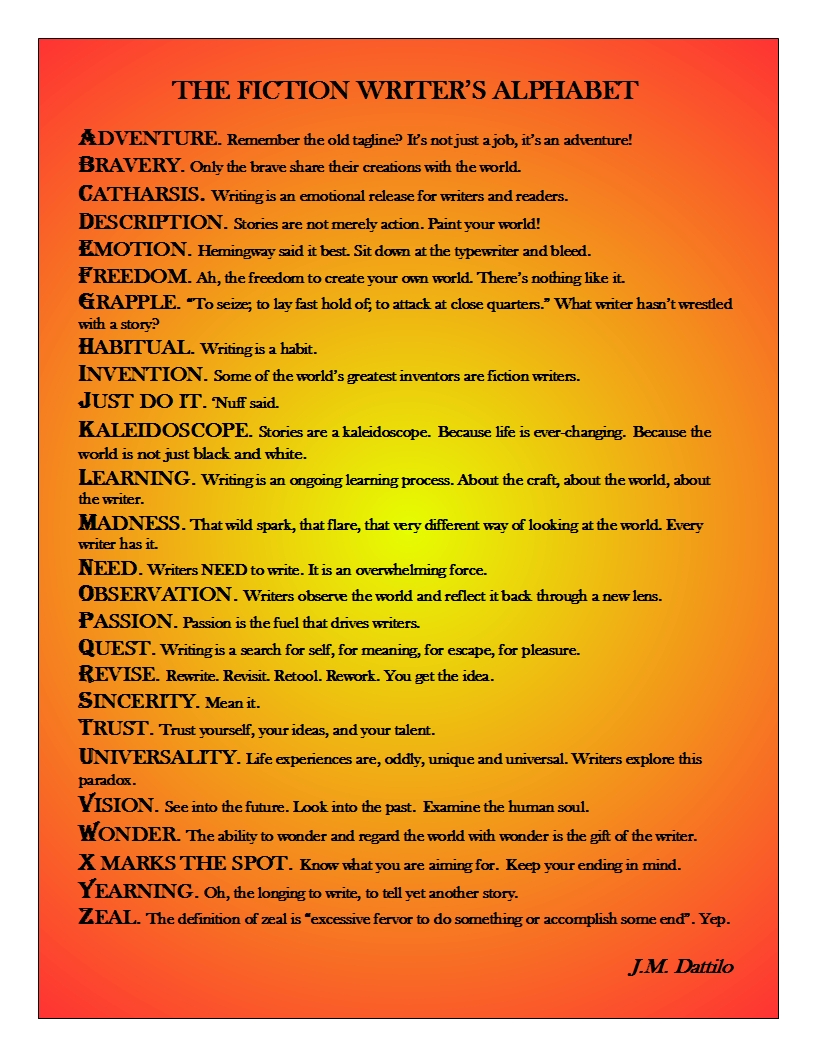
What Great Stories Have in Common
Ever feel deja vu when reading a book or watching a movie? Here’s why.
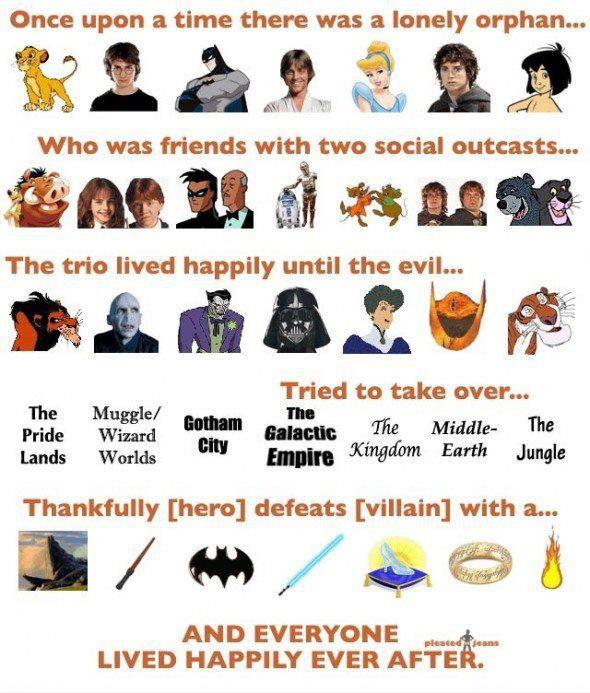
The Lost Art of Thinking
 We’ve been noticing a scary trend in the world. Our devices – phones, tablets, ereaders, computers – are trying to do all our thinking for us.
They remember phone numbers, names, addresses. They guide us through our travels, telling us when to turn and the most direct route to take. They decide what words we are trying to type and helpfully (and sometimes humorously) insert them into our texts.
Did you ever try to format a novel? The word processing program makes all sorts of assumptions about what you are trying to do. It adds blank pages where you do not want them. It tries to indent lines. It adds bullets where none are desired. It does all this because it has been programmed to make assumptions about what you are trying to do and then rush in oh-so-helpfully to make your life easier.
The trouble is computers are not good at thinking. They are not capable of nuance, they don’t understand exceptions. They are rigid, by-the-book, follow-the-rules kind of thinkers. And yet with every new device, every updated program, we are allowing them to do more and more of our thinking for us.
Why? It saves times. It’s convenient. It’s just so damn easy.
No one remembers phone numbers anymore. No one needs to learn or even remember how to get to a new location. We don’t have to memorize addresses. We don’t even have to remember what books we have read. Somewhere, in the gigantic world we call the Internet, a database exists that tracks every book purchase and every other purchase for that matter. Our computers remember our logins and passwords so that we don’t have to. They remind us of birthdays. They make recommendations on everything from what we should read next to whom our perfect lover might be.
Don’t believe computers are thinking for you? Take this simple test. Can you dial the phone numbers of your family and closest friends without looking the numbers up? Can you drive to a place you have never been before without a GPS? Do you remember all your logins and passwords? Can you recall birthdays in a timely-enough fashion to send a card?
Many folks will claim life is so hectic, so stressful, so gosh-darned busy, that having computers remember things for us is a wonderful idea. And, yes, as tools go, computers are pretty amazing, and they make life easier in many ways. However, our brains, like our bodies, become out-of-shape from lack of use. Computers take from us a vital function. They are directing our decisions. They are becoming our memories.

Profanity and Freedom
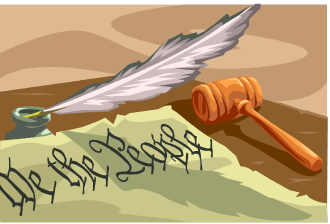 Middleborough, Massachusetts recently enacted an ordinance that allows police to fine anyone who swears in public $20. We have a few questions.
Who decides what constitutes profanity? Does this mean the citizens of Middleborough can dang it and darn it but not damn it? Can a farmer step in horse manure but pay for the privilege of stepping in horse shit? Can you scare the heck out of someone but not scare the hell out of him? For that matter, when is the word hell considered profanity? Are you following the law if you discuss Hell as a place/idea/punishment but out of line if you tell someone to go there?
And what about that little thing called the Bill of Rights. (Fascinating document, by the way. More people should read it.) What about that very first amendment? You know, the one that says,
“Congress shall make no law respecting an establishment of religion, or prohibiting the free exercise thereof; or abridging the freedom of speech, or of the press; or the right of the people peaceably to assemble, and to petition the Government for a redress of grievances.“
And then there is the opinion of the United States Supreme Court,which ruled that the government cannot prohibit public speech just because it contains profanity.
That is really the point. Freedom of speech means freedom for everyone, even people who are expressing themselves in ways we disagree with and promoting ideas that we do not like. For speech is either free or it is not. There is no middle ground.
The Sounds of Today
 Boy, the world sure sounds different than it did when we were growing up.
Anyone out there remember the good old days? Basketballs and bicycles, “Tag, you’re it!” and “Race you to the corner!” The noise of a neighborhood football game in the backyard. The sound of feet pounding through the house. Moms and Dads everywhere screaming, “Go outside and play!”
Homes and yards today are very different. The exuberant voices have quieted, the running feet have slowed. The games have become virtual, friends meeting in cyberspace instead of in person. And the sounds of the virtual world and the real world are sometimes hard to distinguish.
Picture this: a mom sitting in her office writing a new chapter for her book, one ear cocked, as always, for the sounds of children, pets, husband, and other miscellaneous visitors. She hears the plaintive cry of a cat. Repeatedly. Upon investigation, she discovers that it is merely a virtual pet, crying out to be fed/played with/brushed or whatever else the computer program demands. She returns to her creating. In another room, her husband is attempting to speak in a computer-simulated monotone. “Yes.” “Service.” “No.” “Service.” “YES.” “SERVICE.” Is he crazy? No, he is merely trying to get a voice-recognition phone system to connect him with the service department.
A baby cries. A baby? We don’t have a baby. Are the cries coming from inside the house or through the open window? No, Mom, it’s just a virtual baby. Mom wonders if young mothers ever ignore their babies cries because they think it is merely the older children playing with virtual babies instead of their living siblings. Mom settles back to continue her sci-fi novel. She is deep into the description of a space battle that seems so real to her she can actually hear the sounds of space ships. Wait. Why are the sounds coming from the living room? Of course. A group of kids, computers in hand, have flown into space to defend Earth from an alien invasion. Mom returns to her writing. She can’t help wondering if a real alien invasion occurred, would anyone notice?
And then the creepiest sounds of all. Subtle sounds that take a few moments to break through the writing fog. Shuffling footsteps. Distant moans. Mom looks at her watch. Is it time for dinner already? Are her poor, hungry children dragging themselves down the hall demanding nourishment?
Nope. It is the apocalypse. The virtual zombie apocalypse, that is. The undead are dragging themselves across computer screens not down the hallway. Mom returns to her work, hoping that the day the real zombies show up, she will be able to tell the difference.
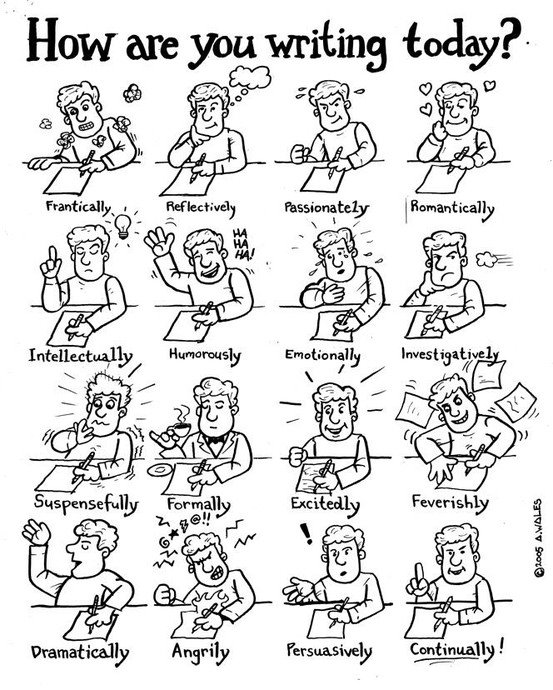
To Blog or Not to Blog
 To blog, or not to blog–that is the question.
Whether ’tis nobler in the mind to suffer
The slings and arrows of outrageous comments
Or to take arms against a sea of bloggers
And by blogging join them. To write, to blog–
No more–and by a blog to say we endure
The heartache, and the thousand natural shocks
That blogging is heir to. ‘Tis a consummation
Devoutly to be missed! To write, to blog–
To blog–perchance to be Freshly Pressed: ay, there’s the rub,
For in that blog of ours what thoughts may come
When we have blogged of our weekly toil,
Must give us pause. There’s the rejection
That makes calamity of so long a blog.
For who would bear the whips and scorns of blogging,
Th’ writer’s wrong, the proud man’s comments
The pangs of despised blogs, the blogger’s delay,
The insolence of bloggers, and the spurns
That patient bloggers of th’ unworthy takes,
When he himself might his blog make
With a bare pen? Who would blogs bear,
To grunt and sweat under a weary blog,
But that the dread of something other than blogging,
The undiscovered country, from whose bourn
No blogger returns, puzzles the will,
And makes us rather bear those blogs we write
Than fly to others that we know not of?
Thus conscience does make bloggers of us all,
And thus the native hue of blogging
Is sicklied o’er with the pale cast of thought,
And blogs of great pitch and moment
With this regard their blogs turn awry
And lose the name of action. — Soft you now,
The fair blogger! — Author, in thy bloggings
Be all my blogs remembered.
(An adaptation of Hamlet’s Soliloquy from the play by W. Shakespeare. Sorry, Will, we couldn’t resist!)
Why Writers Shouldn’t Read Reviews
 The agony and the ecstasy. That’s the best way to describe what it is like for authors to read reviews of their books. It’s natural to want to know what readers think of your story, but, overall, it is better to give it a miss. Why? Reviews will eventually affect your writing.
But isn’t that the point, some folks will ask. Don’t reviews help authors improve, point out flaws, show them the strengths and weaknesses of the story? Not necessarily. Reviews reflect the personal experience of the reader and every reader’s experience is unique. Readers bring their own ideas, fears, prejudices, and emotions to any book they read and will interpret the story through the filter of their own perception.
No writer can write to meet the expectations and beliefs of every reader. Louis May Alcott in her book Little Women describes the character Jo’s struggle with this very problem. Jo has written a book and everyone around her has made helpful suggestions about how she can make the book better. She rewrites the book according to these criticisms and the book is published.
Well, it was printed and she got three hundred dollars for it; likewise plenty of praise and blame, both so much greater than she expected that she was thrown into a state of bewilderment.
“You said, Mother, that criticism would help me. But how can it, when it’s so contradictory that I don’t know whether I’ve written a promising book or broken all the ten commandants?”
It can be very confusing to read some of the comments reviewers make. Some reviewers praise our book for being great science fiction. Others say it is pure fantasy. Still other rail that it should be one or the other. One reviewer complained that we used too many “ten dollar words” while another reader lambasted us for having a limited vocabulary. Some love the story, claiming it was the best book they ever read. Others attack with such nastiness that you might think our book was going to be the cause of the fall of western civilization.
Bewildering, indeed.
The worst part is that when an author sits down to write, these reviews rattle around in his head subtly, and sometimes not-so-subtly, tainting his writing. Gee, someone really loved this; I’d better give them more of it. Hmm, someone really hated that. Better leave it out altogether. And on and on.
Reviews can get in the way of creativity. They obscure the unique perspective an author brings to her book. Part of the joy of writing is the creating a story for the love of telling a tale your own way. If an author begins to try to write to suit other people’s visions of the story, the uniqueness is lost.
The joy of reading comes from interpreting the story from your own viewpoint. Each reader takes away a different experience from a book. Reviews are nothing more than an expression of each reader’s unique view of the world. So, authors, don’t take it to heart.
Living your life according to what others think is best for you is dust and ashes. Creating stories according to what others think is best is the same.
 J.M. Dattilo