Category Archives: Authors
To Blog or Not to Blog
 To blog, or not to blog–that is the question.
Whether ’tis nobler in the mind to suffer
The slings and arrows of outrageous comments
Or to take arms against a sea of bloggers
And by blogging join them. To write, to blog–
No more–and by a blog to say we endure
The heartache, and the thousand natural shocks
That blogging is heir to. ‘Tis a consummation
Devoutly to be missed! To write, to blog–
To blog–perchance to be Freshly Pressed: ay, there’s the rub,
For in that blog of ours what thoughts may come
When we have blogged of our weekly toil,
Must give us pause. There’s the rejection
That makes calamity of so long a blog.
For who would bear the whips and scorns of blogging,
Th’ writer’s wrong, the proud man’s comments
The pangs of despised blogs, the blogger’s delay,
The insolence of bloggers, and the spurns
That patient bloggers of th’ unworthy takes,
When he himself might his blog make
With a bare pen? Who would blogs bear,
To grunt and sweat under a weary blog,
But that the dread of something other than blogging,
The undiscovered country, from whose bourn
No blogger returns, puzzles the will,
And makes us rather bear those blogs we write
Than fly to others that we know not of?
Thus conscience does make bloggers of us all,
And thus the native hue of blogging
Is sicklied o’er with the pale cast of thought,
And blogs of great pitch and moment
With this regard their blogs turn awry
And lose the name of action. — Soft you now,
The fair blogger! — Author, in thy bloggings
Be all my blogs remembered.
(An adaptation of Hamlet’s Soliloquy from the play by W. Shakespeare. Sorry, Will, we couldn’t resist!)
Why Writers Shouldn’t Read Reviews
 The agony and the ecstasy. That’s the best way to describe what it is like for authors to read reviews of their books. It’s natural to want to know what readers think of your story, but, overall, it is better to give it a miss. Why? Reviews will eventually affect your writing.
But isn’t that the point, some folks will ask. Don’t reviews help authors improve, point out flaws, show them the strengths and weaknesses of the story? Not necessarily. Reviews reflect the personal experience of the reader and every reader’s experience is unique. Readers bring their own ideas, fears, prejudices, and emotions to any book they read and will interpret the story through the filter of their own perception.
No writer can write to meet the expectations and beliefs of every reader. Louis May Alcott in her book Little Women describes the character Jo’s struggle with this very problem. Jo has written a book and everyone around her has made helpful suggestions about how she can make the book better. She rewrites the book according to these criticisms and the book is published.
Well, it was printed and she got three hundred dollars for it; likewise plenty of praise and blame, both so much greater than she expected that she was thrown into a state of bewilderment.
“You said, Mother, that criticism would help me. But how can it, when it’s so contradictory that I don’t know whether I’ve written a promising book or broken all the ten commandants?”
It can be very confusing to read some of the comments reviewers make. Some reviewers praise our book for being great science fiction. Others say it is pure fantasy. Still other rail that it should be one or the other. One reviewer complained that we used too many “ten dollar words” while another reader lambasted us for having a limited vocabulary. Some love the story, claiming it was the best book they ever read. Others attack with such nastiness that you might think our book was going to be the cause of the fall of western civilization.
Bewildering, indeed.
The worst part is that when an author sits down to write, these reviews rattle around in his head subtly, and sometimes not-so-subtly, tainting his writing. Gee, someone really loved this; I’d better give them more of it. Hmm, someone really hated that. Better leave it out altogether. And on and on.
Reviews can get in the way of creativity. They obscure the unique perspective an author brings to her book. Part of the joy of writing is the creating a story for the love of telling a tale your own way. If an author begins to try to write to suit other people’s visions of the story, the uniqueness is lost.
The joy of reading comes from interpreting the story from your own viewpoint. Each reader takes away a different experience from a book. Reviews are nothing more than an expression of each reader’s unique view of the world. So, authors, don’t take it to heart.
Living your life according to what others think is best for you is dust and ashes. Creating stories according to what others think is best is the same.

The Future: If You Blink, You’ll Miss It
 We were recently asked if it was difficult to write science fiction in a world where the future quickly and persistently becomes the present.
You betcha!
How lovely it must have been to be a sci-fi writer one hundred years ago. The inventions and devices you imagined and described were unlikely to show up not only in the near future but in your lifetime. Your futuristic world would remain just that, an imaginative journey into a far-off place.
Not so today. When we wrote the first draft of Time’s Edge twenty-five years ago, the future we imagined included wireless mobile computers, touch screens, voice-activated devices, quantum physics… Well, you get the picture. Flash forward twenty years. We haul out the manuscript, begin to polish it for publication, and notice a big problem. The future we described had pretty much become the present.
We rewrote the story and have since added two sequels, but we wonder how long it will be before the devices and ways of life we described become part of our present lives. And then we wonder what it will be like for the science fiction writers of tomorrow. Technology is evolving so quickly, the future will be happening as they are writing it!
FUTURE WRITER: Let’s see. Orion steps into his personal protection pod (PPP) which will shield him from the harmful rays of the sun that shine through the depleted ozone layer, filter the smog-laden air, protect him from the chemicals that saturate the ground…
NEWS FLASH: Get your very own Personal Protection Pod. Don’t put yourself at risk of our deadly environment again! PPP’s will shield the sun’s deadly rays, filter your air, protect you from toxic chemicals…
FUTURE WRITER: Sigh. I wish I lived in the 21st century. Life was so much simpler then. Let’s see. Maybe Orion could just wear a special suit. Wait a minute. An ultra-thin fabric, transparent yet tough, which provides all the protection he needs from the environment. It will be practically invisible, so no one will know he is wearing it… I’ll call it WonderFabric…
NEWS FLASH: WonderFabric, now available from fine eOutlets everywhere. Transparent yet tough, invisible to others…
FUTURE WRITER: I’m switching to historical fiction.
We’ve Been Editing Our New Book
 Sung to the tune “I’ve Been Working on the Railroad”
We’ve been editing our new book
all the livelong day!
We’ve been editing our new book,
and the time has slipped away.
We can see the deadline looming
so we rise up early in the morn.
We can hear each other shouting
“Damn it, cut some more!”
Damn it, cut some more!
Damn it, cut some more!
Damn it, cut some more and more, more, more!
Damn it, cut some more!
Damn it, cut some more!
Damn it, cut some more, more, more!
Someone has to check for grammar.
Someone has to check for form.
Someone has to check for style.
While rewriting it some more!
We’re singin’ “Gee, why did I write this?
Gee, this piece has to go-o-o-o-o.
Gee, why is editing so damn hard?
Wish we were strummin’ on the old banjo!”

Why Book Promotion Sucks
 1. It’s tedious. Not at first. At first it’s new and exciting. Kind of like falling in love. But as time passes, monotony sets in. How many ways can you say “buy my book”? How many times do you have to say it? The answer? Forever! It’s an endless Groundhog Day of tweets, blurbs, and blogs. (Groundhog Day. The movie with Bill Murray where he lives the same day over and over. Just rent it and watch it. You’ll see what we mean.)
2. Everyone else is doing it. Yep. Me, you, our plumber, your mother-in-law, and everyone else on the block. The result? A cacophony of white noise in which nearly everyone’s attempts to be heard are lost. Like The Cricket in Times Square. (A book by George Selden. Go to the library. Borrow it and read it. You will see what we mean.)
3. It’s time consuming. Hours and hours every day. Must post. Must blog. Must check stats. It eats loads of time. Time that could be spent writing. Most authors are aware that the more books you write, the more income you bring in. And writing is what authors love to do. But who has time to do it? (Yes, we can already hear the writers who will say, I network, raise children, sew my own clothes, bake my own bread, and write ten novels a year. We admire you. We also promise to send flowers when you drop dead from over-work.)
4. It’s painful. In several ways. Physically. (Repetitive strain injuries from being on the computer too much. Also headaches from banging one’s head on the desk. ) Mentally. (I can’t possibly think of one more blog/post/tweet. Plus my head hurts from banging it on the desk.) Emotionally. (Riding the roller coaster of feelings as we watch our stats rise to new heights only to tumble back, dashing all our hopes. And the drama of restraining each other from banging our heads on the desk.)
5. We suspect it is not quite as necessary as everyone believes it is. Do our tweets, blogs and posts really make a difference? Probably not. We don’t have enough followers on any site to claim that we have reached a broad range of people. And yet our books are selling; sales are steady. (Phew. We can stop banging our heads on the desk.)
The bottom line? Ratings, reviews, and pricing seem to matter the most in promoting a book. What do authors do when they want their books to be noticed? They cut the price and have a sale. Some give a book away for free, knowing this will draw attention to their work. The hope is that if readers like the free book, they will be willing to pay for other novels by the same author.
We are going to try an experiment. (Actually it is already underway.) We are cutting back on all the social networking. Not abandoning it, just reducing the amount of time spent on promotion so we can spend more time writing. for when it comes right down to it, a good quality story is the best promotional tool of all.
Owls, Larks and the Writing Process
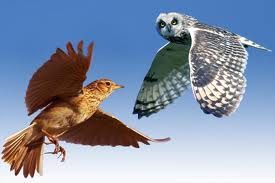 What do owls and larks have to do with writing? Well, when you are two authors writing under one pen name and one of you is an owl and the other a lark, finding the perfect time for writing sessions can be challenging.
For those who are wondering what we mean by owls and larks, we are referring to people who like to stay up late (owls) and those who like to get up early (larks). It’s annoying enough if you happen to be an owl married to a lark (or vice-versa) but things really get frustrating when owls and larks try to work together.
From an owl’s point of view, larks are those annoying creatures who rise and shine with smiles on their faces and a song on their lips. Very painful for any nearby owls who can’t help wondering what the irritating lark can possibly be so cheerful about at such an ungodly hour of the day. Larks think nothing of awakening an owl just as the sun is rising, eager to relate the fantastic plot idea they had during the night. Larks have the mysterious ability to wake up with their brains fully functioning. No warm-up time seems to be required. Owls just can’t relate.
A writing lark will often fly out of bed and head straight for the computer. The bubbly, oh, so sickeningly alert lark will then proceed to check all social networking sites, email accounts, etc., and call out interesting tidbits to the owl sleeping in the next room. The enthusiasm can be overwhelming to the poor owl, who dives deeper under the blankets in a classic owl-camouflage maneuver. The oblivious lark continues to chirp, unaware that her chatter is not even being processed by the sleepy owl brain.
From a lark’s point of view, owls are those annoying creatures who stay wake half the night prowling through the house and wanting to engage in animated book discussions just as the poor lark is trying to fall asleep. How anyone can be so full of energy after being awake for so many hours is a mystery to the lark who operates on theory that people should be full of energy after a good night’s sleep not just as they are going to bed. The owl flies in the face of such drivel, hitting his stride as the midnight hour approaches. Larks often wonder what they have done to deserve such a spouse.
Owls will often grab a yellow legal pad, turning on the bedroom light and jotting down several pages of notes on an upcoming chapter, repeatedly expressing their ideas to the lark, who, by now, has wrapped a pillow around her head in a standard lark-avoidance move. The owl, oblivious to such tactics, continues to hoot, his enthusiasm wasted on the nearly but, unfortunately, not quite asleep lark.
So what are owls and larks who work together supposed to do? We don’t know about other owls and larks, but twilight is our answer. The owl is truly awake and the lark has not yet begun to get drowsy. Thorny issues of character development and sticky plot problems can only be resolved during this magical time when both the owl’s brain and the lark’s brain are still firing on all cylinders.
The owl/lark problem is an old one, addressed by many writers and artists over the years. We’ll end with our favorite commentary on the issue by the legendary Charles Shultz in his wonderful cartoon “Peanuts”:
Lucy: Physicians can learn a lot about a patient by asking what may even sound like a very simple question. Which do you prefer, a sunrise or a sunset?
Charlie Brown: Well, a sunset, I guess!
Lucy: I thought so! You’re just the type ! I might have known that! What a disappointment! People who prefer sunsets are dreamers! They always give up! They always look back instead of forward! I just might have known you weren’t a sunrise person! Sunrisers are go-getters! They have ambition and drive! Give me a person who likes a sunrise every time! Yes, sir! I’m sorry Charlie Brown. If you prefer sunsets to sunrises, I can’t take your case. You’re hopeless! (She leaves.)
Charlie Brown: Actually, I’ve always sort of preferred noon!
How Writers Exercise
 You would think that sitting at a computer all day would mean that writers get darn little exercise. Not so! Using just a few objects found in any house, writers can stay fit. Here’s how:
1. Cat. Preferably, more than one cat. Sit at the computer. Begin to type. At the sound of a loud crash in another room, jump up and race to the scene. Clean up broken vase/lamp/knickknack. Return to computer. Begin to type. When loud hissing and snarling breaks out, run to the next room. Observe cats sitting calmly washing themselves and looking at you as if wondering why you are breathing so hard.
2. Washer and Dryer. Throw a load of clothes in the washer. Run back upstairs. Sit at computer. Begin to type. Remember fabric softener. Run back downstairs. Add fabric softener. Run back upstairs. Sit at computer. Actually type a few pages. Washer buzzer sounds. Run back downstairs. Transfer load to dryer. Start second load. Run back upstairs. Begin to type. Remember dryer sheet. Run back down stairs. See washer spilling water all over the floor. Grab mop and begin aerobic mopping.
3. Stove. Place main course in oven. Sit at computer. Begin to type. Jump up and run to kitchen to start the potatoes. Return to computer. Begin to type. Jump up and run back to kitchen to turn down potatoes which are boiling over. Return to computer. Begin to type. Buzzer sounds. Jump up, run to kitchen and turn meat over. Return to computer. Begin to type. Encounter really exciting scene which is flowing so beautifully you are transported. Come to when smoke alarm sounds. Race madly to kitchen to put out the fire.
4. Spouse. Get married. Sit at computer. Begin to type. Spouse calls from basement. Jump up and run downstairs. Answer perfectly simple question about what to do with old box of junk. Run back upstairs. Begin to type. Spouse calls from garage. Run out to garage. Help lift several heavy boxes of junk to make room for new box of junk. Return to computer. Begin to type. Spouse calls from front yard. Get up and run outside. Cat escaped while spouse was carrying box of junk to the garage. Spend next twenty minutes jogging around the yard chasing the cat.
5. Kids. Self-explanatory.
6. Telephone. Sit at computer. Begin to type. Phone rings. Jump up, since it is the land line in the other room, and run to see who it is. A telemarketer. Return to computer. Begin to type. Cell phone rings. Jump up (because the phone is in the bedroom on the nightstand) and run. Friend texting silly joke. Return to computer. Begin to type. BOTH phones ring. Answer cell phone (which you have cleverly brought with you) while running for the other line. Friend wants to know if you received the funny text. Telemarketer wants to sell you a gym membership. Laugh so hard it counts as aerobic breathing.
Writing in Layers
 The first draft of Time’s Illusion is nearing completion. And the next step? You’d think it was editing, right? Nope. It’s layering.
When we write, we look at the first draft as the basic structure of the book. It establishes where the action is, who is present, how the characters move through the story. A bare-bones, action-and-dialogue scenario. A lot of experimenting goes on in our first drafts, a testing of story boundaries and character limits.
Upon this base we add layers. This process fleshes out the details that really bring the tale to life. Descriptions are expanded. Dialogue is enhanced. This is the five-senses phase, when we get to play with color, sound, and sensation. Like a stage production, we decide what our characters will be wearing, we paint the scenery, adjust the lighting. The worlds we have created come alive.
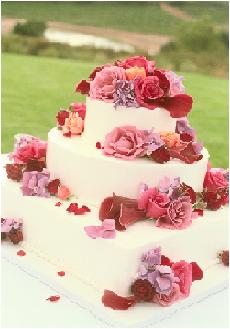
For those who aren’t into play production, think of it as baking a cake. The cake itself is the basic story. The icing holds the story layers together. The fancy flourishes give the tale depth and beauty. When it is complete it is a feast for the eyes. It smells delicious. Your mouth waters in anticipation. The first bite makes you want to take a second bite.
Just like a good book.
 J.M. Dattilo